
Tired of predictable conversations? Want to inject some genuine humor and deepen your connections with friends? Funny questions are your secret weapon. They're not just about passing the time — they're a surprisingly effective way to break the ice, uncover hilarious anecdotes, and create lasting memories that strengthen bonds. Whether you're planning a hangout, a road trip, or just looking to brighten a casual chat, the right funny question can turn an ordinary moment into something genuinely memorable.
Why Laughter Is So Good for Friendships
Before we get to the questions, it's worth understanding why funny conversations are more than just entertainment. The science here is stronger than most people realize.
A 2015 study published in Cognition and Emotion found that laughing together — not just at the same thing simultaneously, but as a coordinated social act — is one of the strongest predictors of relationship quality and reported closeness. The act of coordinating laughter signals mutual understanding, shared perspective, and trust.
Robin Dunbar's research at Oxford adds another layer: laughter triggers the release of endorphins, the same neurochemical pathway activated by physical touch. This means shared humor creates a neurological bond, not just an emotional one. It's one reason inside jokes feel so intimate — they're proof of a shared history and mutual understanding that outsiders don't have access to.
This is why funny questions punch above their weight in conversation. They're not just time-fillers. They create micro-moments of genuine connection, reveal how someone thinks, and build the kind of shared reference points that make friendships feel rich and layered. A single ridiculous hypothetical question, asked at the right moment, can become a story that friends tell for years.
Key Insights into Fun Friend Conversations
- Laughter Strengthens Bonds: Sharing humor and funny stories creates a sense of camaraderie and intimacy among friends. Research consistently shows that couples and friend groups who laugh together report higher relationship satisfaction and greater resilience during conflict.
- Icebreakers Extraordinaire: Funny questions are excellent for initiating conversations, easing social tension, and making everyone feel comfortable — especially in groups where people don't know each other well.
- Uncovering Quirks: These questions often reveal surprising personality traits, unique perspectives, and funny habits, leading to deeper understanding and appreciation of your friends. The most revealing conversations often start as the funniest ones.

The beauty of funny questions lies in their ability to lighten the mood and encourage authentic self-expression. They invite playful imagination and often lead to amusing revelations that you'd never surface through typical small talk. From "what if" scenarios to quirky hypotheticals, these prompts are designed to spark joy and create an environment where everyone feels free to share their whimsical side.
Quick Icebreaker Questions to Kick Off the Fun
Starting a gathering with lighthearted questions is a perfect way to break the ice and get everyone comfortable. These prompts are simple, relatable, and designed to generate immediate smiles and conversation. They work by lowering the social stakes — everyone has a funny answer, no one can give a wrong answer, and the laughter that comes from the first few exchanges sets the tone for everything that follows.
The psychology behind this is straightforward: positive early interactions create what psychologists call "positive sentiment override," a buffer that makes people interpret each other more charitably for the rest of the interaction. Start with a funny question, and the whole gathering gets a head start.
Imagining Alternate Lives
- If you could swap lives with your pet for a day, what's the first thing you'd do?
- What's the weirdest food combo you've ever tried and actually liked?
- If you were a kitchen appliance, which one would you be and why?
- What animal would make the worst possible roommate?
- If you could only eat one condiment for the rest of your life, what would you pick?
Personal Cinematic Adventures
- If your life was a movie, what would the title be — and who plays you?
- Superpower time: Would you rather be able to fly or turn invisible? Why?
- If you had to narrate your own life like a nature documentary, what would you say right now?
- What genre is your life right now — comedy, drama, thriller, or documentary?
Unleashing Inner Grooves
- What's your go-to dance move when no one's watching?
- If our group were a movie, what would the title be?
- What's the most embarrassing song you know all the lyrics to?
- What's your karaoke song of choice, even if you'd never actually sing it?
These icebreakers are fantastic for setting a positive tone, making everyone feel included, and smoothly transitioning into deeper, more humorous exchanges. They help individuals ease into the conversation without any awkwardness, ensuring a lively start to any get-together. The key is to answer your own question first — your willingness to be silly gives permission to everyone else.
Quirky Hypotheticals for Endless Giggles
Dive into the wonderfully weird with these hypothetical questions that are sure to get everyone laughing. They force silly choices and often reveal more about a person's sense of humor and imagination than you'd expect. These are perfect for group hangouts, virtual calls, or even just passing the time on a long drive.
The best hypotheticals have a structure: they force a choice between two equally absurd options, and the "why" behind the choice is always more interesting than the choice itself. Someone who would rather fight a hundred duck-sized horses because they could just "step around them one by one" is revealing something about their personality. Someone who'd fight the horse-sized duck because "I can negotiate with a single opponent" is revealing something completely different.
Fantastical Dilemmas
- Would you rather fight one horse-sized duck or fifty duck-sized horses?
- If you woke up tomorrow as a vegetable, what would you want to be and why?
- Would you rather know the exact moment you're going to die, or never know?
- If you had to be haunted by one person's ghost for the rest of your life, who would make the best ghost companion?
- Would you rather only be able to whisper or only be able to shout?
Absurd Trade-offs
- Would you rather have to sing everything you say for the rest of your life or have to dance everywhere you go?
- Would you rather wear shoes made of cheese or socks made of sandpaper?
- Would you rather eat a bug-sized elephant or an elephant-sized bug?
- Would you rather have no elbows or no knees?
- Would you rather be forced to wear a superhero cape 24/7 or a cowboy hat?
Supernatural Choices
- Would you rather be able to talk to ghosts but they only tell bad jokes, or talk to aliens but they only speak in riddles?
- If you could swap wardrobes with any fictional character, who would it be and why?
- Would you rather have a rewind button for your life or a pause button?
- If you could time travel but only to embarrassing moments in your own past, would you?
These questions prompt imaginative and often hilarious discussions, showcasing your friends' creativity and unique thought processes. For an endless supply of inspiration, RandomQ's Spin mode generates random questions across multiple categories — great for groups where you need quick, fresh prompts.
Embarrassing Funny Questions for Throwback Stories
Nothing bonds friends like sharing a good laugh over past mishaps and cringe-worthy moments. These questions are designed to unearth hilarious childhood tales or recent fails, promising non-stop laughter and a deeper connection through shared vulnerability.
There's a counterintuitive truth about embarrassing stories: the willingness to share them signals trust and safety. When someone laughs at themselves in front of you, they're giving you something. Reciprocating with your own embarrassing story deepens the connection. Research on self-disclosure shows that mutual vulnerability — even funny, lighthearted vulnerability — significantly increases feelings of closeness.
The best embarrassing questions are specific enough to invite real stories rather than vague deflections, but open enough that everyone has an answer.
Wardrobe Woes & Hair Horrors
- What's your most epic wardrobe malfunction story?
- Describe your worst haircut ever — who was the culprit?
- What's an outfit you wore with absolute confidence that you now realize was a complete disaster?
- Did you ever have a phase that now makes you cringe? What was it?
Social Blunders
- If you had to relive one embarrassing high school moment on repeat, which would it be?
- What's the funniest autocorrect fail you've ever sent to the wrong person?
- Have you ever confidently done something completely wrong in public and only realized afterward? What happened?
- What's a time you waved back at someone who wasn't actually waving at you?
- What's the most awkward introduction you've ever had to make?
Quirky Habits and Childhood Beliefs
- What's a silly habit you have that your friends tease you about?
- What's the silliest thing you believed as a kid?
- Did you have a weird childhood fear that seems completely irrational now?
- What's the most dramatic reaction you've ever had to something minor?
The trick is to keep things playful and light-hearted — the goal is stories that make everyone laugh, including the person telling them, not actual embarrassment. These stories often become the inside jokes and cherished shared memories that define a friendship over years.
Everyday Funny Questions About Quirks and Habits
Turning mundane daily topics into sources of comedy can be surprisingly effective. These questions about quirks and habits are relatable and perfect for keeping the energy high in casual meetups or ongoing group chats. They offer a window into the amusing aspects of daily life — the strange things everyone does but rarely admits.
The best everyday funny questions have a quality of "wait, I do that too" — they uncover the absurdities of normal life that usually go unspoken. That moment of recognition is its own form of intimacy.
Dreamscapes and Domestic Confessions
- What's the strangest dream you've had lately?
- If your fridge could talk, what secrets would it spill about you?
- What's the most ridiculous reason you've stayed up way too late?
- What's the last thing you Googled that you'd be embarrassed for anyone to see?
- What's something you do at home that you'd never admit to in public?
Survival Scenarios & Hypothetical Hygiene
- What's your zombie apocalypse survival plan — in three steps?
- Pick one: Never shower again or never brush your teeth?
- If you had to survive one week alone in the wild with only what's in your bag right now, how long would you actually last?
- What would be the first thing you'd hoard if a new pandemic hit tomorrow?
Peculiar Debates and Useless Talents
- What's the silliest thing you've argued about with a stranger?
- What's your most useless talent?
- What hill are you prepared to die on, even though everyone thinks you're wrong?
- What's a skill you have that serves absolutely no practical purpose but you're secretly proud of?
- What's the weirdest rule you've made for yourself that no one else knows about?
These questions highlight the amusing side of everyday existence and personal eccentricities, providing a rich ground for humor and shared understanding among friends. The answers tend to be both funnier and more revealing than anyone expects when they sit down to answer.
Pop Culture Funny Questions for Shared Laughs
Bonding over shared interests in movies, shows, and memes is a fantastic way to connect. These pop culture-inspired questions tap into inside jokes, create shared comedic experiences, and reveal how different two people can be even when they've both seen the same things.
The "controversial opinions" subcategory is particularly potent here — there's something about mild disagreement over harmless cultural things (the best movie villain, the most overrated show) that generates genuine spirited debate without any real stakes. It's the ideal low-intensity friction that makes conversations feel alive.
Fictional Romances and Cinematic Critiques
- If you could date any fictional character, who and why?
- What's the worst movie adaptation of a book you've seen?
- What movie or show do you think is massively overrated?
- What's your hottest take on a beloved film that you're ready to defend?
- Which fictional universe would you least want to actually live in?
Superhero Team-ups and Thematic Anthems
- Superhero team-up: Who's your sidekick and what's your duo name?
- If your life had a theme song, what would it be right now?
- Which movie villain had the most understandable motivation?
- If you had to live inside one video game world for a year, which one and why?
Dramatic Arias and Comfort Shows
- What song always makes you sing dramatically alone?
- Favorite comfort show you'll rewatch forever?
- Which character from a show or movie do you think you'd actually be friends with in real life?
- What's a movie you quote regularly but would be embarrassed to admit you've seen 10+ times?
These questions ignite discussions about shared entertainment, fostering a sense of community and providing endless opportunities for inside jokes and playful critiques.
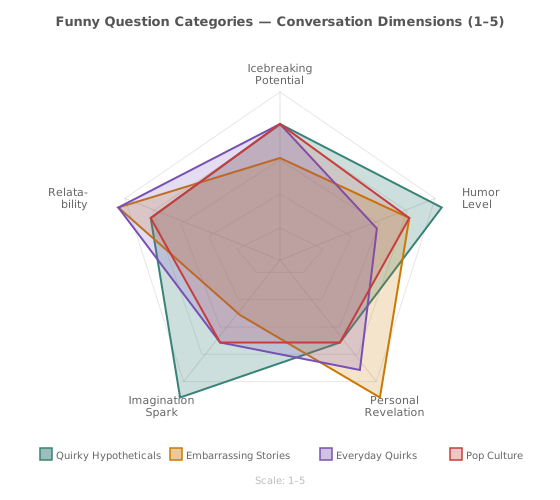
Radar chart illustrating the strengths of various funny question categories across five dimensions: Icebreaking Potential, Humor Level, Personal Revelation, Imagination Spark, and Relatability.
The radar chart visually represents how different categories of funny questions excel in various aspects. Quirky Hypotheticals rate highly in humor and imagination, while Embarrassing Stories are excellent for personal revelation and relatability.
Questions by Setting: Picking the Right Category for the Moment
Not every funny question fits every situation. A question that kills at a house party might land flat at a quiet dinner for two. Matching the question to the moment is what separates a good conversation from a great one.
Parties and Large Groups (10+ people)
Big groups need questions with quick, punchy answers — things that can be answered in seconds and instantly understood. The icebreaker category works best here. Go for questions that invite comparison ("would you rather...") or ask for a one-word answer with a follow-up. The Spin Wheel mode in RandomQ is built exactly for this — it randomly picks categories and generates questions instantly, which removes awkward silences and keeps energy moving.
Best picks: Quick hypotheticals, "this or that" format, and questions that reference shared pop culture everyone already knows.
Small Groups and Close Friends (3–6 people)
This is where the embarrassing stories and quirky habits categories shine. Your closest friends can handle slightly more personal questions, and the smaller size means everyone can actually hear each other's full answer. Don't rush. A single embarrassing story question can carry a table for 20 minutes if you let it. The goal is the story behind the answer, not the answer itself.
Best picks: "What's the silliest thing you believed as a kid?" and "What's your most useless talent?" — these tend to cascade into stories that branch into more questions naturally.
One-on-One Conversations
Funny questions work differently in a pair. They can go deeper and more personal than you'd attempt in a group. This is where pop culture questions evolve into genuine taste-based conversations, and everyday quirks become a window into someone's actual personality. The hypothetical scenarios are especially effective in one-on-one settings because you can dig into the "why" without losing the crowd.
Best picks: The hypothetical scenarios and "if your life had a theme song" type questions — these reveal a surprising amount about how a person sees themselves.
Virtual Calls and Remote Gatherings
Screen-based conversations lose the spontaneity of in-person energy, but funny questions compensate for that. Questions with visual or performative elements work especially well — asking someone to show their most recent camera roll photo, or to demonstrate their secret talent on screen, bridges the distance in a way that regular conversation can't.
Best picks: Quick round-robin questions where everyone answers in turn. Keep rounds short so lag and timing don't disrupt the flow.
How to Keep the Conversation Going After the Question
A funny question is just a starting point. What separates a good conversation from a great one is what happens after the first answer. Here's how to keep the energy alive.
1. React before you redirect. Don't immediately fire the next question after someone answers. Respond first — laugh, react, share something related. The question is an opener, not a script.
2. Ask "why?" and "what happened next?" These two follow-ups are underrated. A response like "I once got stuck in an elevator wearing a hot dog costume" becomes a full story if someone asks "wait, why were you in a hot dog costume in the first place?"
3. Let stories branch. If someone's embarrassing moment story reminds you of your own, share it. Conversations have their own momentum. Funny questions work best when they're spark plugs, not guard rails.
4. Match the energy. If the group is loose and laughing freely, lean into the more absurd hypotheticals. If the mood is more relaxed, pull back to everyday quirks or lighter questions. Reading the room keeps the conversation feeling natural rather than forced.
5. Know when to stop. When a conversation is flowing on its own, put the questions away. The goal was never to get through a list — it was to get people talking. Once that's happening, you've already won.
Choosing and Customizing Your Questions
To maximize the impact of funny questions, it helps to tailor them to your audience and the specific context. Consider the dynamics of your group, their comfort levels, and their sense of humor. What one group finds hilarious, another might find awkward. Mixing different types of questions ensures a dynamic conversation that caters to various preferences.
Factors for Effective Question Selection
| Factor | Description | Why it Matters |
|---|---|---|
| Audience Compatibility | Match questions to the group's age, shared experiences, and general humor style. | Ensures inclusivity and maximizes laughter without causing discomfort. |
| Contextual Relevance | Consider the setting (e.g., party, road trip, quiet evening) to choose appropriate questions. | Questions for a lively party differ from those for a relaxed one-on-one. |
| Humor Type | Identify if the group prefers absurd, observational, self-deprecating, or dark humor. | Aligns with the group's comedic taste for better engagement. |
| Balance | Mix light, quick questions with more elaborate hypotheticals. | Keeps the conversation flowing and prevents it from becoming repetitive or too intense. |
For endless possibilities and tailored prompts, RandomQ offers free question generation across multiple categories — Classic, Spin, and Deep modes all provide different flavors of questions, from hilarious to surprisingly meaningful.
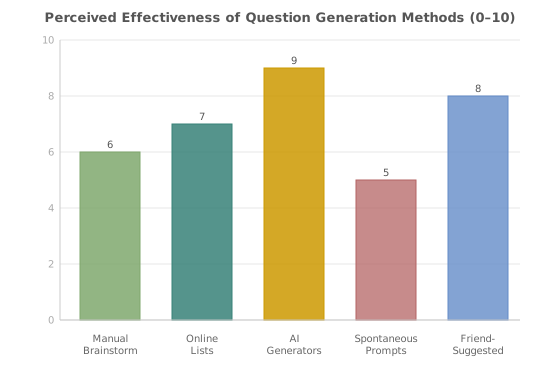
Bar chart comparing perceived effectiveness (0–10) of different question generation methods. AI generators and friend-suggested topics score highest for variety and personalization.
The Science Behind Shared Laughter and Friendship
Humor isn't just entertainment — it's social glue. A 2015 study published in Cognition and Emotion found that laughing together (rather than just laughing at the same thing simultaneously) was a strong predictor of relationship quality. The act of coordinating laughter signals mutual understanding and trust.
Robin Dunbar's research at Oxford has shown that laughter triggers the release of endorphins — the same neurochemical pathway activated by physical touch. This means shared humor creates a neurological bond, not just an emotional one. It's one reason inside jokes feel so intimate: they're proof of a shared history and mutual understanding.
There's also the disclosure mechanism: funny stories require mild self-exposure. Sharing an embarrassing moment means making yourself a little vulnerable — and research on self-disclosure by Sidney Jourard and later Arthur Aron consistently shows that mutual vulnerability, even low-stakes humorous vulnerability, accelerates feelings of closeness. The person laughing at your story while sharing their own is communicating: I see you, I'm like you, and I'm not judging.
This is why funny questions punch above their weight. They're not just time-fillers — they're relationship-deepening tools in disguise.
FAQ: Your Funny Questions Guide
What makes a question "funny" for friends?
Funny questions thrive on surprise, exaggeration, and relatability — they poke fun at everyday absurdities without being offensive. The best ones are open-ended enough that the answerer has to actually think, but simple enough that there's no wrong answer. If it makes you chuckle just reading it, it's a good start.
Can funny questions really help deepen friendships?
Absolutely. While they might seem lighthearted, funny questions reveal personality quirks, shared senses of humor, and lead to nostalgic storytelling — all of which contribute to stronger bonds. Research on shared humor consistently shows it's one of the fastest ways to increase feelings of closeness. The laughter itself triggers endorphin release, and the stories that emerge create shared reference points that define a friendship over time.
How many funny questions should I ask in one hangout?
Start with 5–10 to keep things flowing; too many can overwhelm. It's best to mix them with natural chit-chat and allow conversations to evolve organically from the prompts. The questions are starters, not scripts — once a good conversation is happening, let it run without asking the next question.
What if someone doesn't laugh at the same things?
Different people have different humor styles — absurdist, observational, self-deprecating, dry. If a question lands flat, don't force it. Move to a different category and see what clicks. The goal is shared laughter, not unanimous laughter, and finding the specific flavors of humor that connect your particular group is part of the fun.
Where can I find more funny questions to ask my friends?
RandomQ offers a free, instant question generator with multiple modes. The Classic mode gives you curated questions by category, the Spin mode randomly selects questions with a wheel mechanic perfect for groups, and the Deep mode has questions for when you want to go from funny to genuinely meaningful. No account required.
Are these questions suitable for kids or mixed-age groups?
Many can be adapted, but it's important to avoid overly mature topics with younger participants. The icebreaker and hypothetical categories are safest for mixed ages. Stick to "would you rather" style questions, fantasy swaps, and silly scenarios — these work universally. Avoid the embarrassing stories category with kids unless you know them well.
What if a funny question accidentally leads somewhere serious?
Follow it. Sometimes a hypothetical question about "what would you do if you could live your life over?" starts as funny and ends somewhere genuine. That's not a failure — it's a sign that the conversation has real depth. Funny questions are good at creating safe spaces for honesty because the humor lowers people's defenses first.
Conclusion: Laugh Your Way to Stronger Bonds
Funny questions are more than just conversation starters — they're tools for building and nurturing deeper friendships. By embracing humor and encouraging playful interactions, you create an environment where everyone feels valued, understood, and genuinely connected.
The laughter shared over a ridiculous hypothetical or an embarrassing anecdote becomes the fabric of cherished memories. Inside jokes accumulate. Shared stories create a private language between friends. And all of it starts with someone willing to ask a slightly absurd question and laugh at the answer.
Don't let your conversations fall flat. Unleash the power of humor and watch your friendships flourish.
Generate funny questions for your next hangout on RandomQ → Free, no login, works on mobile. Try the Spin mode for a group and the Classic mode for one-on-one.